

────────── הביתה ──────────
In wartime Moissac, 372 Jewish children were protected through the courage of Shatta and Bouli Simon and a network of local solidarity. A newly formed association is now seeking to acquire the historic house and turn it into a living place of remembrance and education. Philippe Sola explains why this effort matters and speaks with Marion Decome about the project.
Donate: Support the official fundraising campaign
─────────────────────────
There are places that do not merely preserve memory. They activate it. They compel us.
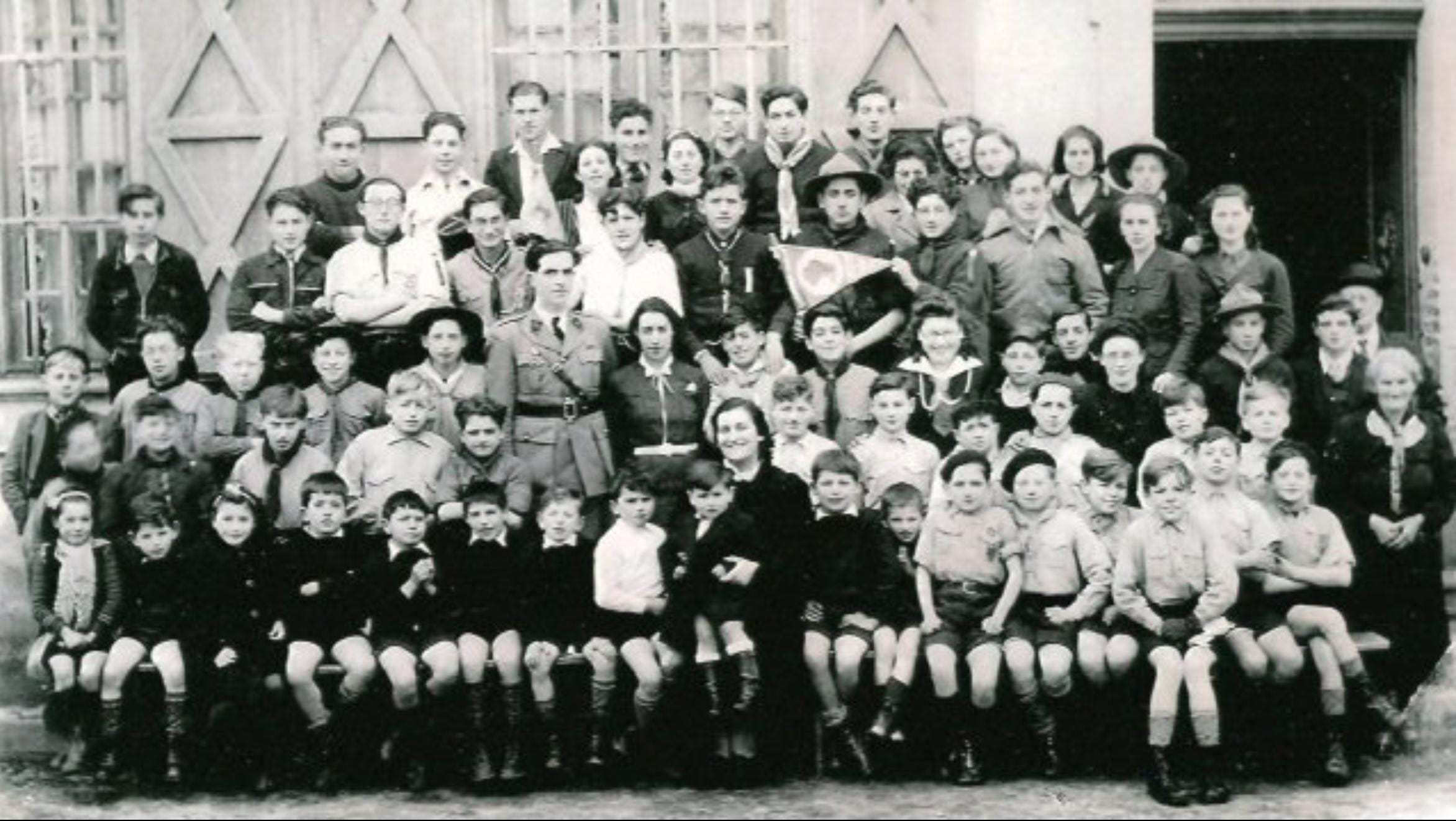
At 18 Quai du Port in Moissac, an ordinary house welcomed 372 Jewish children between 1939 and 1943. Not a single one was arrested. Not a single one was deported. Around Shatta and Bouli Simon, leaders of the Éclaireurs israélites de France (Jewish Scouts of France), a chain of solidarity was forged: resistance networks, local authorities, and everyday citizens. When the threat grew too intense, the children were dispersed, hidden, and evacuated to isolated farms surrounding the village—giving rise to the local term “planquing”. Every single child survived. Many individuals who later achieved prominence spent time in this house: Jean-Claude Grumberg, Serge Klarsfeld, Nicolas Ribowski, Gabriel Cohn-Bendit...
Today, this house is listed on the private real estate market. Our association, founded specifically for this purpose by Janaïne Golonka and Marion Decome, has just signed a purchase offer for €310,000. We have six months to raise the required amount; otherwise, the offer will expire.
In Le Juif et le nazi, métaphysique de l’antisémitisme (The Jew and the Nazi: Metaphysics of Antisemitism), I sought to understand what the Nazi was truly pursuing in the Jew, beyond social, economic, or racial pretexts. I argued that Jewish existence carries a metaphysical dimension: a “full void.” A hollow at the center of fullness, an open space that is not an absence, but a reservoir of being, an inexhaustible potential, a freedom from complete adherence to a single time or place. This void terrifies totalizing powers because it resists complete absorption. Yet it also fascinates, pointing toward that which cannot be destroyed—toward the origin. The Nazis attempted to appropriate this void by creating an absolute vacuum, emptying Europe of its Jews. In doing so, they discovered that being itself did not retreat. The deeper they dug the void, the more they activated what remains within it.
Moissac represents the exact inverse of that totalizing impulse.
Where the Nazi attempted to destroy Jewish being by multiplying death, Shatta and Bouli Simon protected Jewish being by multiplying life. They did not merely save physical bodies. They preserved the very possibility of living as a Jew: identity, culture, ritual, literature, song, play, and joy. “No child must ever remain alone,” Shatta—the luminous guiding figure of the house —used to say.
Janaïne Golonka and Marion Decome expressed this with striking clarity when they first stepped inside the house. Having visited dozens of Holocaust memorial sites across Europe— all documenting horror and the unspeakable—they realized Moissac delivers a different message: it was possible to act differently. And therefore, it remains possible today to speak of the Holocaust through that which held firm. Jewish resistance existed (as documented in Maurice Lugassy’s work L’Armée juive, une résistance française), bolstered by the entire local population of Moissac who sheltered the children.
Janaïne and Marion met Jean-Claude Simon and Albert Perelman—two men who, when speaking of Moissac, become six-year-old boys again. They recall lifelong friendships, rituals, learning, and calling the opposite bank of the Tarn river “Tahiti.” A “dream life,” even for those who had lost parents, language, and roots. Through their eyes, Shatta Simon emerges: strong, irreverent, loving deeply without seeking approval—a beacon in the night.
Moissac established a core foundation, a physical and symbolic fortress: protecting childhood, empowering the collective, championing constructive action (”be a builder, not a talker”), and preserving the identity and heritage that others sought to erase. They accomplished this through joy, gentleness, poetry, and sport, refusing to allow barbarism the final word on the value of a child’s life. The Moissac house, deserving of far greater national and international recognition, stands as the symbolic inverted image of the Anne Frank House—a refuge where children were successfully saved.
Antisemitism is ultimately a desperate attempt to seize control of this “full void” by destroying it. Today, as Jewish communities worldwide face renewed threats, we have the opportunity to protect Jewish existence here in Moissac—not through static museum displays or artificial reconstructions, but by keeping it vibrant: as a documentation center, a residence for artists and researchers, educational workshops, and a living bridge for future generations (Ledor Vador).
The association has six months on the private market. Either we secure the funds, or the opportunity is lost forever.
Interview: Philippe Sola in conversation with Marion Decome
Philippe Sola: How did you reach the absolute conviction that you had to act upon discovering this house at 18 Quai du Port and meeting Jean-Claude Simon?
Marion Decome: When Janaïne and I first entered the house, we already knew its history well. We had read books, listened to testimonies, and watched documentaries. I served on the Scientific Advisory Board responsible for the historical markers throughout Moissac and worked with students from the François Mitterrand high school who co-created the Baludik historical app. But stepping through the door felt like a rare privilege—stepping back in time to access the intimacy of what took place there. We instantly recognized that this memorial space was unlike any other. We have visited dozens of sites across France, Germany, Poland, and Hungary dealing with the Shoah and wartime childhood. Most attempt to convey the horror and injustice—which is vital. But Moissac demonstrates that an alternative was possible. We realized we can address Holocaust memory through its positive counterpart, and this house is a living embodiment of that concept. Meeting Jean-Claude Simon and Albert Perelman was deeply moving. When discussing Moissac, they are six years old again. Their recollections reflect the universality of childhood: lifelong bonds, heightened emotions, playful rituals, and everyday triumphs—learning to swim, run, sing, read, invent languages, talk in the dormitories after lights out, or celebrate holidays. They describe a joyful existence despite having lost parents, language, or roots. Through them, we also encounter Shatta: a strong, independent, hardworking woman who led with unwavering purpose. From our earliest conversations with the owner, we knew a buying opportunity would eventually arise. The house is large and complex, unsuited for a single household. A year after first joking about purchasing it, here we are.
Philippe Sola: Recalling the 372 children saved between 1939 and 1943 through civil resistance carries strong resonance today. How does this model of humanity obligate us now?
Marion Decome: The core principles upheld by Robert Gamzon, Shatta, and Bouli Simon constitute a heritage to defend at all costs:
• Protecting childhood.
• The strength of the collective (”no child must remain alone”).
• Constructive action (”be a builder, not a talker”).
• Safeguarding Jewish cultural heritage alongside physical lives. For the EIF in Moissac, this ethical foundation was non-negotiable. Yet their brilliance lay in defending it through joy, sweetness, games, literature, music, and sports. They saved lives by interpreting “life” in its fullest sense. If they accomplished this amidst severe adversity, how could we justify giving up today?
Philippe Sola: With the house on the private market, the timeline is critical. Where do things stand with the public fundraising campaign?
Marion Decome: For real estate acquisitions, failure to reach the target means the project cannot proceed. Our funding strategy relies on public grants, heritage foundation support, and crowdfunding. While public contributions are currently the most visible element, all three streams are essential. The SNCF’s history and remembrance unit has already proposed €50,000 in funding. Every donation and shared message helps secure this location as a bridge between past and future.
Philippe Sola: Beyond the physical structure, what is the long-term vision for the site?
Marion Decome: We aim to create an active space highlighting four main historical themes:
• Protection of children in wartime.
• Jewish resistance movements.
• Collective resistance and the actions of the Righteous Among the Nations.
• Women’s role in the Resistance and in aid and relief organisations. The house will serve as a bright, welcoming space for younger audiences, hosting visiting groups, research, workshops, and artistic residencies. Without artificial period reconstructions, we want to combine historical reflection with warmth, comfort, and the enduring spirit of childhood.
Support the House of the Hidden Children of Moissac
https://www.fondation-patrimoine.org/les-projets/maison-des-enfants-caches-de-moissac/106278
https://maison-enfants-moissac.fr/
Editorial note: the English source provided is a shorter adaptation of the French interview. The six-month purchase window described in the text should not be confused with the donation campaign’s displayed duration.
WWW.HABAYTA.ORG