

Leonard Cohen lui a donné l’élan de chanter ses propres chansons. Dix ans après sa disparition, la chanteuse et plasticienne Sandra Zemor reprend « Heart with No Companion » et lui rend hommage à Rochester. De cette reprise aux mélodies hassidiques de Nahman de Bratslav, on découvre une artiste qui fait dialoguer le chant, le dessin et le film.
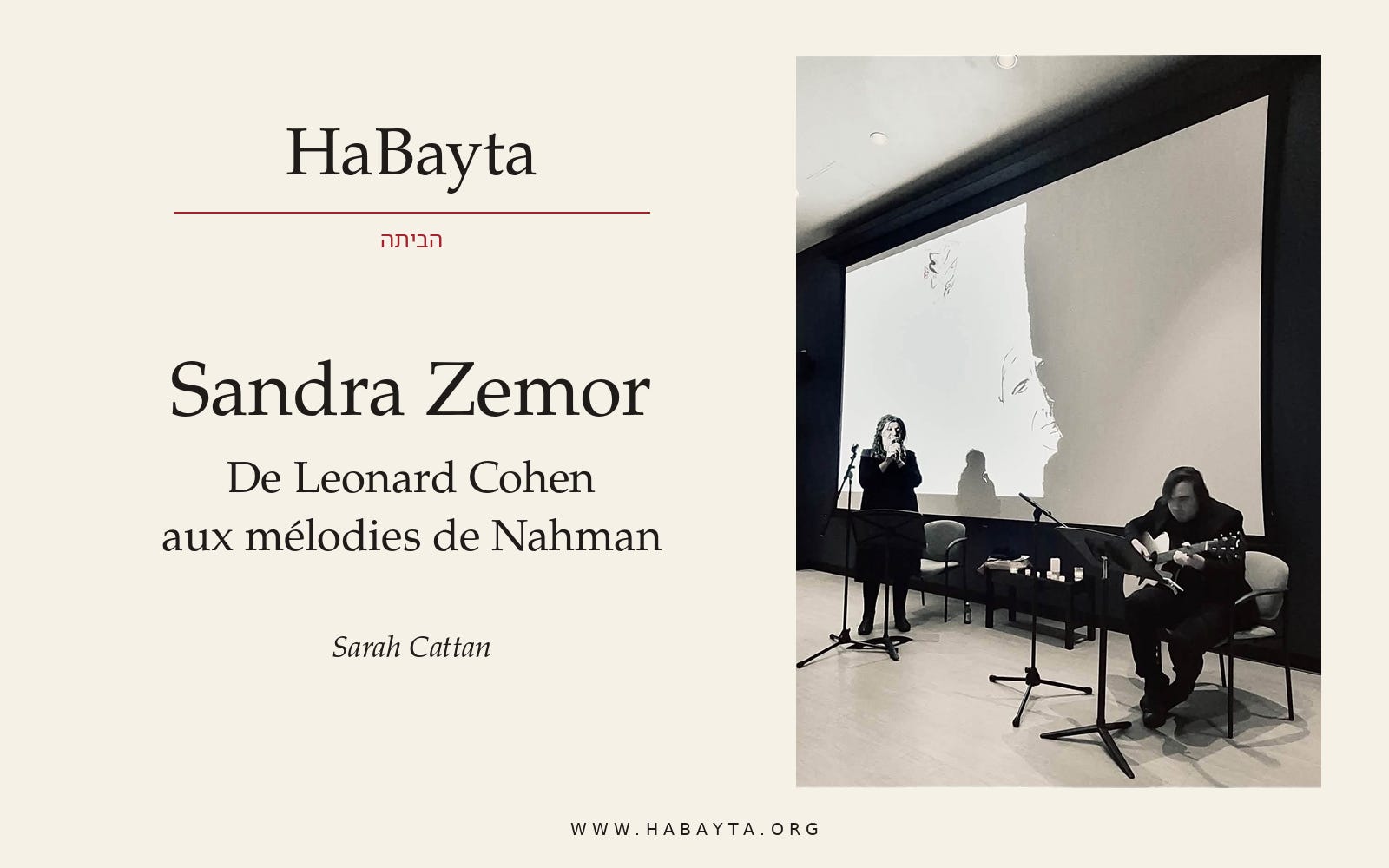
Sur une photo du récital de Rochester, Sandra Zemor tient le micro à deux mains. À sa droite, Will Anderson joue de la guitare. Derrière eux, un visage tracé de quelques lignes apparaît sur l’écran. Cette image dit assez bien comment travaille Sandra Zemor. Une voix, un instrument, quelques traits lui suffisent pour faire tenir ensemble une chanson et un film.
Le 11 novembre, à l’université de Rochester, dans l’État de New York, elle est venue chanter Leonard Cohen et parler de ce qu’elle entend dans ses chansons. Elle avait choisi pour cette rencontre un sujet précis, la kabbale et le féminin divin. Son hommage passe aussi par un nouveau clip, « Heart with No Companion », enregistré pour le dixième anniversaire de la mort du chanteur. Elle y signe le chant, les percussions et les œuvres visuelles, avec Ronny Gold à la réalisation musicale. events.rochester.edu
J’avais déjà suivi son travail à Tribune Juive, où Daniella Pinkstein lui avait consacré un long entretien dans sa rubrique « Murmuration ». Le mot convient à cette voix qui se tient tout près du murmure. Sandra y racontait avoir longtemps gardé ses propres chansons à l’abri, derrière ses livres, ses films et ses récitals en galerie. Cohen lui a donné l’élan de les chanter. Elle le dit avec un jeu de mots qu’on comprend mieux à l’écouter parler de lui. Il lui a « ouvert la voix, sa voie ». Elle lui a dédié le travail d’écriture et de composition de son deuxième album, Last Call for Love, où ses chansons côtoient les siennes. www.tribunejuive.info
Pour entendre ce qu’elle fait de cette liberté, il faut aussi l’écouter chanter « Karev Yom ». Elle reprend ce chant de la Haggadah de Pessah sur un nigun, une mélodie hassidique de la tradition de Breslev. Dans le film tourné à Hydra, on la voit marcher seule et jouer du tambourin. Le texte demande que se rapproche un jour qui ne serait « ni un jour ni une nuit ». Dans Les Dix Mélodies, autre morceau du même album, elle part d’un conte de Nahman de Bratslav, Les Sept Mendiants. Deux enfants se perdent dans une forêt. Des mendiants leur apportent tour à tour un don. L’un d’eux, sourd aux bruits du monde, entend les secrets du ciel. On comprend que cette histoire ait retenu une artiste qui a choisi de chanter si bas.
Dans l’entretien avec Daniella Pinkstein, Sandra Zemor raconte qu’après le 7 octobre elle s’est enfermée pour écrire et chanter, « pour m’apaiser et apaiser les cœurs ». Cette phrase éclaire Melodies for the Bride, l’album dont sont tirés ces deux morceaux. Elle y chante une prière de Pessah, un conte de Nahman et jusqu’à « Not Dark Yet » de Bob Dylan. Ces chansons viennent de très loin les unes des autres. Sa voix leur donne le temps de se rencontrer. www.tribunejuive.info
Sandra m’a écrit pour me demander si HaBayta pouvait faire entendre sa nouvelle reprise. Elle m’a aussi confié qu’elle avait déjà enregistré d’autres chansons pour un prochain album et qu’elle cherchait encore des soutiens pour poursuivre les séances. J’avais envie de vous faire entendre celle-ci, et de vous donner envie d’écouter les siennes. Commencez par Cohen, puis écoutez « Karev Yom ». En passant de l’un à l’autre, c’est Sandra Zemor qu’on découvre.
Découvrir l’album Melodies for the Bride
Relire l’entretien de Daniella Pinkstein
Sarah Cattan
Sandra Zemor, from Leonard Cohen to the Melodies of Nachman
Leonard Cohen gave Sandra Zemor the courage to sing her own songs. Ten years after his death, she records her own version of “Heart with No Companion” and pays tribute to him in Rochester. From that recording to the Hasidic melodies of Rabbi Nachman of Breslov, we discover an artist who brings song, drawing and film together.
By Sarah Cattan
In one photograph from the Rochester recital, Sandra Zemor holds the microphone in both hands. Will Anderson plays guitar beside her. Behind them, a face drawn in a few lines appears on the screen. The photograph tells you something about how Sandra Zemor works. A voice, an instrument and a few strokes are enough for her to bring a song and a film together.
On November 11, at the University of Rochester in New York State, she came to sing Leonard Cohen’s songs and talk about what she hears in them. She chose a particular thread to follow through his work, the Kabbalah and the divine feminine. Her tribute also takes the form of a new video for “Heart with No Companion,” recorded to mark ten years since Cohen’s death. Zemor performs the vocals and percussion and created the artwork. Ronny Gold produced the recording.
Watch Sandra Zemor perform “Heart with No Companion”
I had already followed her work at Tribune Juive, where Daniella Pinkstein interviewed her at length for her column “Murmuration.” It’s a fitting word for a voice that comes so close to a whisper. Zemor told Pinkstein that she had long kept her own songs tucked away behind books, films and intimate gallery recitals. Cohen gave her the courage to sing them. She describes it with a play on two French words that sound alike, voix and voie. He opened up both her voice and her path. She dedicated the writing and composition of her second album, Last Call for Love, to him. Her own songs sit alongside his.
To hear what she does with that freedom, listen to “Karev Yom.” She sets this song from the Passover Haggadah to a nigun, a Hasidic melody from the Breslov tradition. In the film, shot on the Greek island of Hydra, we see her walking alone and playing the tambourine. The words ask for a day that is neither day nor night to draw near. Another track on the same album, “Les Dix Mélodies,” takes its cue from Rabbi Nachman’s tale The Seven Beggars. Two children lose their way in a forest. The beggars come, one by one, each bearing a gift. One of them, deaf to the noise of the world, can hear the secrets of heaven. You can see why that story might stay with an artist who has chosen to sing so softly.
In her interview with Daniella Pinkstein, Zemor recalls shutting herself away to write and sing after October 7, to soothe herself and bring comfort to others. That thought runs through Melodies for the Bride, the album from which both tracks are taken. On it, she sings a Passover prayer, draws on a tale by Rabbi Nachman and takes on Bob Dylan’s “Not Dark Yet.” These songs come from very different places. Her voice gives them time to meet.
Sandra wrote to ask whether HaBayta could share her new recording. She told me she had already recorded other songs for a forthcoming album and was looking for support to continue the sessions. I wanted you to hear this one and to want to hear her own songs, too. Start with Cohen, then listen to “Karev Yom.” In going from one to the other, you’ll discover Sandra Zemor.
Listen to “Karev Yom” · Listen to “Les Dix Mélodies” · Explore Melodies for the Bride · Read Daniella Pinkstein’s interview in French and Hebrew
עברית
סנדרה זמורה, מלאונרד כהן אל ניגוני רבי נחמן
לאונרד כהן נתן לה את האומץ לשיר את שיריה שלה. עשור לאחר מותו, סנדרה זמורה מקליטה גרסה משלה ל־״Heart with No Companion״ ומקדישה לו ערב מחווה ברוצ׳סטר. מן הביצוע הזה ועד לניגוני רבי נחמן מברסלב, מתגלה אמנית שמחברת בין שירה, רישום וקולנוע.
מאת שרה קטן
באחד התצלומים מן הרסיטל ברוצ׳סטר, סנדרה זמורה אוחזת במיקרופון בשתי ידיה. לצדה ויל אנדרסון מנגן בגיטרה. מאחוריהם, על המסך, מופיעות פנים ששורטטו בכמה קווים. בתצלום הזה אפשר לראות משהו מן הדרך שבה זמורה עובדת. קול, כלי נגינה וכמה קווים מספיקים לה כדי לחבר בין שיר לסרט.
ב־11 בנובמבר היא הגיעה לאוניברסיטת רוצ׳סטר שבמדינת ניו יורק כדי לשיר משיריו של לאונרד כהן ולספר מה היא שומעת בהם. למפגש בחרה נושא ממוקד, הקבלה והנשיות האלוהית בשיריו. חלק נוסף במחווה הוא הקליפ החדש ל־״Heart with No Companion״, שהוקלט לציון עשור למותו של כהן. זמורה שרה, מנגנת בכלי הקשה וחתומה על היצירות החזותיות בקליפ. על ההפקה המוזיקלית חתום רוני גולד.
לצפייה בקליפ ״Heart with No Companion״ בביצוע סנדרה זמורה
עקבתי אחר עבודתה כבר ב־Tribune Juive, שם הקדישה לה דניאלה פינקשטיין ריאיון ארוך במדורה ״Murmuration״. השם הולם את הקול הזה, שמתקרב כל כך ללחישה. זמורה סיפרה לפינקשטיין ששנים ארוכות שמרה את שיריה לעצמה, מאחורי הספרים, הסרטים והרסיטלים האינטימיים בגלריות. כהן נתן לה את האומץ לשיר אותם. בצרפתית היא מספרת זאת במשחק מילים על voix ו־voie, שתי מילים שנשמעות אותו הדבר. הוא פתח לה דרך אל קולה שלה. את עבודת הכתיבה וההלחנה של אלבומה השני, ״Last Call for Love״, הקדישה לכהן. שיריה שלה נשמעים בו לצד שיריו.
כדי לשמוע מה עשתה בחופש הזה, כדאי להקשיב ל״קרב יום״. את הפיוט מההגדה של פסח היא שרה בניגון חסידי ממסורת ברסלב. בסרט שצולם באי היווני הידרה רואים אותה צועדת לבדה ומנגנת בתוף מרים. מילות הפיוט מבקשות לקרב יום ״אשר הוא לא יום ולא לילה״. בשיר נוסף מאותו אלבום, ״עשר המנגינות״, היא שואבת השראה מ״מעשה משבעה קבצנים״ של רבי נחמן. שני ילדים תועים ביער. הקבצנים באים בזה אחר זה, וכל אחד מביא עמו מתנה. אחד מהם, החירש לרעשי העולם, שומע את סודות השמים. אפשר להבין מדוע הסיפור הזה נשאר עם אמנית שבחרה לשיר בקול כה שקט.
בריאיון עם דניאלה פינקשטיין סיפרה זמורה שאחרי שבעה באוקטובר הסתגרה כדי לכתוב ולשיר, כדי להרגיע את עצמה ולהביא נחמה לאחרים. הדברים האלה מאירים את ״Melodies for the Bride״, האלבום שממנו לקוחים שני השירים. באלבום נשמעים פיוט של פסח, שיר בהשראת מעשייה של רבי נחמן וגם ביצוע ל־״Not Dark Yet״ של בוב דילן. השירים האלה באים מעולמות רחוקים זה מזה. הקול שלה נותן להם זמן להיפגש.
סנדרה כתבה לי ושאלה אם נוכל להשמיע ב־HaBayta את הביצוע החדש שלה. היא סיפרה שכבר הקליטה שירים נוספים לאלבום שבדרך, ושהיא עדיין מחפשת תמיכה כדי להמשיך בהקלטות. רציתי שתשמעו את הביצוע הזה, ושיתעורר בכם החשק לשמוע גם את שיריה שלה. התחילו בכהן, ואחר כך הקשיבו ל״קרב יום״. במעבר משיר לשיר תגלו את סנדרה זמורה.
להאזנה ל״קרב יום״ · להאזנה ל״עשר המנגינות״ · להאזנה לאלבום ״Melodies for the Bride״ · לריאיון של דניאלה פינקשטיין בעברית ובצרפתית
Vous ne payez pas pour lire HaBayta. Vous pouvez choisir de soutenir son indépendance, sa liberté éditoriale et le débat qu’il fait vivre.
Soutenir HaBayta : https://www.habayta.org/subscribe